Tokyo's Africa week: what changed for companies between Japan and Nigeria
Three meetings in Tokyo in one week, a record JICA loan, and a Nigerian push for a joint investment hub. Here's what actually happened and what it means if you work between Japan and Nigeria.
By Joseph Emmanuel, Founder, Jemirae5 min read
For one week in November, Tokyo was the busiest place in the world for conversations about investing in Africa. The President of the African Development Bank Group, Dr Sidi Ould Tah, spent several days in the city on his second official visit as president. Banks, insurers, trading houses and engineering firms met him and each other.
News like this is easy to skim past. Most of it is about development finance, not business deals. But if your company works between Japan and Nigeria, or is thinking about it, three things from that week are worth understanding.
What happened, in order
12 November: a business roundtable with Japanese companies. The African Development Bank Group organised a roundtable with the Japanese private sector in Tokyo. Dr Ould Tah asked Japanese companies to invest more in processing African resources in Africa, rather than only buying raw materials, and said the Bank was ready to provide financing and risk-sharing to support those investments. The agenda covered critical minerals, gas, petrochemicals and fertilisers, energy, agriculture, digital solutions and infrastructure. Japan's Vice-Minister of Finance for International Affairs, Atsushi Mimura, described the Bank as "a trusted partner for Japanese companies looking to develop or expand their operations in Africa."
13 November: JICA's largest loan to the African Development Fund. JICA and the African Development Fund, the Bank Group's arm for the lowest-income countries, signed a Japanese ODA loan of up to 86.6 billion yen, about $583 million. The terms are generous: 0.70 percent interest a year, repaid over 40 years with a 10-year grace period. It funds the Fund's work in 37 eligible countries from 2026 to 2028, and JICA says it advances Japan's commitments from TICAD 9.
16 November: the insurers and guarantors. Japan's export credit insurance agency, NEXI, hosted a roundtable with African and international institutions that finance, insure and guarantee investment, including the African Development Bank Group, Afreximbank, the African Trade and Investment Development Insurance (ATIDI) and the Export Credit Insurance Corporation of South Africa. Their subject was simple to say and hard to do: sharing risk so that more private money reaches real projects in Africa.
Why the last meeting matters most
The loan is the headline number, but for companies the 16 November meeting is the more important signal.
Japanese companies rarely hold back from Africa because they doubt the market. They hold back because of risk they can't price: currency, payment delays, contract enforcement, partners they can't verify from Tokyo. JETRO's own surveys of Japanese companies in Africa have pointed to the same concerns for years.
Export credit insurance and guarantees exist to make that risk manageable. When NEXI, the African Development Bank and African insurers sit at the same table to talk about specific projects, they are working on exactly the problem that stops a Japanese board from saying yes.
The Bank's own release named one Nigerian example among the existing collaborations: fertiliser production in Nigeria with Toyo Engineering and Indorama. That is the model being promoted, a Japanese engineering company, a local industrial partner and shared financing.
And Nigeria's side of the conversation
A few weeks earlier, on 27 October, Nigeria's Minister of Foreign Affairs, Bianca Odumegwu-Ojukwu, met Japan's Ambassador to Nigeria, Suzuki Hideo, in Abuja, according to a statement from her office. She asked for agreements to turn into "tangible economic and development outcomes", encouraged JETRO to connect investors with credible Nigerian businesses, and proposed a Nigeria-Japan Industrial and Investment Hub, asking the embassy to help develop a roadmap for it. She also welcomed a JICA-supported initiative of about $10 million to strengthen Nigeria's start-up ecosystem with the Nigeria Sovereign Investment Authority, and raised visa issues for business travellers. The ambassador said visa matters would be handled quickly.
Put together, both governments are saying the same thing: less ceremony, more projects.
What this means if you work between Japan and Nigeria
If you're a Japanese company looking at Nigeria: the financing and insurance tools are getting more attention, not less. But they follow good projects; they don't create them. You still need reliable information about the market, partners that have been checked, and a clear plan. Now is a good time to do that groundwork, so you're ready when a financing window opens.
If you're a Nigerian company that wants Japanese partners or customers: the call for "credible Nigerian businesses" is an invitation. Japanese partners decide slowly and carefully, and they will look for clear documents, consistent processes and systems that work to international standards. Getting those in order is what makes you the credible partner people are asking for.
For everyone: watch for the roadmap for the proposed Nigeria-Japan Industrial and Investment Hub. If it moves forward, it could become a practical meeting point for both sides.
Our view
Development finance headlines can feel far from day-to-day business. This week was different, because the conversation in Tokyo was about the practical blockers we see on the corridor every day: risk, trust and partners who can be verified.
That's the work we do at Jemirae. We help Japanese companies research Nigeria and check partners before they commit, and we help Nigerian companies build the processes and systems that make them easy to trust. If any of this touches a decision you're making, we're happy to talk it through.
Sources
- African Development Bank Group, "Investing in Africa: African and Japanese leaders aim to turn opportunities into concrete projects", 20 November 2026. afdb.org
- African Development Bank Group, "In Tokyo, Dr Sidi Ould Tah calls on Japanese companies to invest more in local value addition to African resources", 23 November 2026, published via allAfrica.
- JICA, "Signing of Japanese ODA Loan Agreement with African Development Fund (AfDF-17)", 13 November 2026. jica.go.jp
- Office of the Minister of Foreign Affairs of Nigeria, statement on the meeting with Japan's Ambassador, 28 October 2026, reported by the News Agency of Nigeria (via Realnews Magazine).
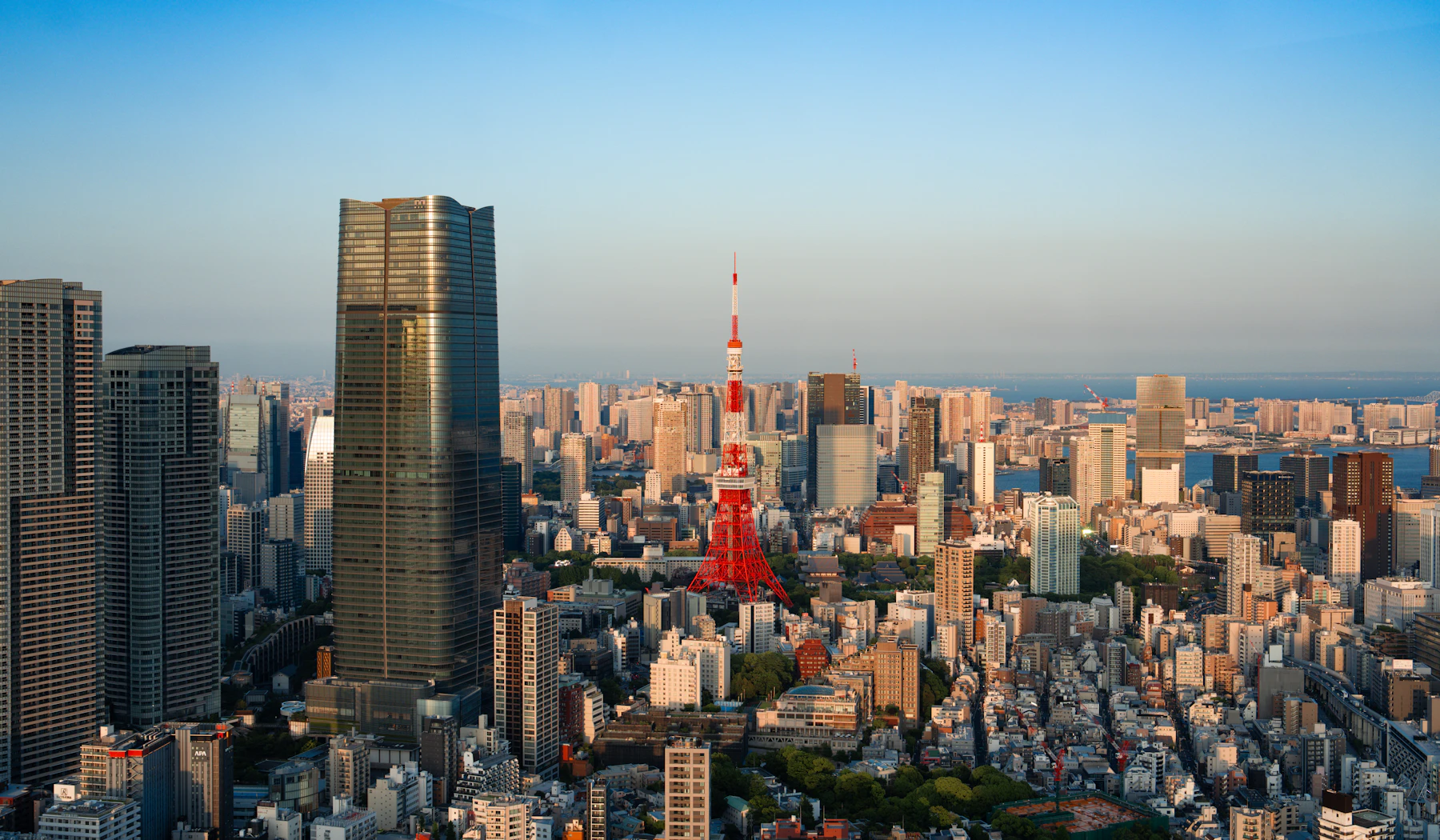
- Cover photo: Ryusei Machida, "Tokyo cityscape with skyscrapers and the iconic Tokyo Tower", Unsplash, free to use under the Unsplash License. unsplash.com/photos/QIKlaMOwdwE
Tell us what you're working on. We'll tell you honestly whether we can help, and what we'd do first.