
Jemirae case study
Jemirae Academy
The private learning platform we built for our own team
- Internal tool
- Web App
- Product Design
- Engineering
- Learning content
- Film
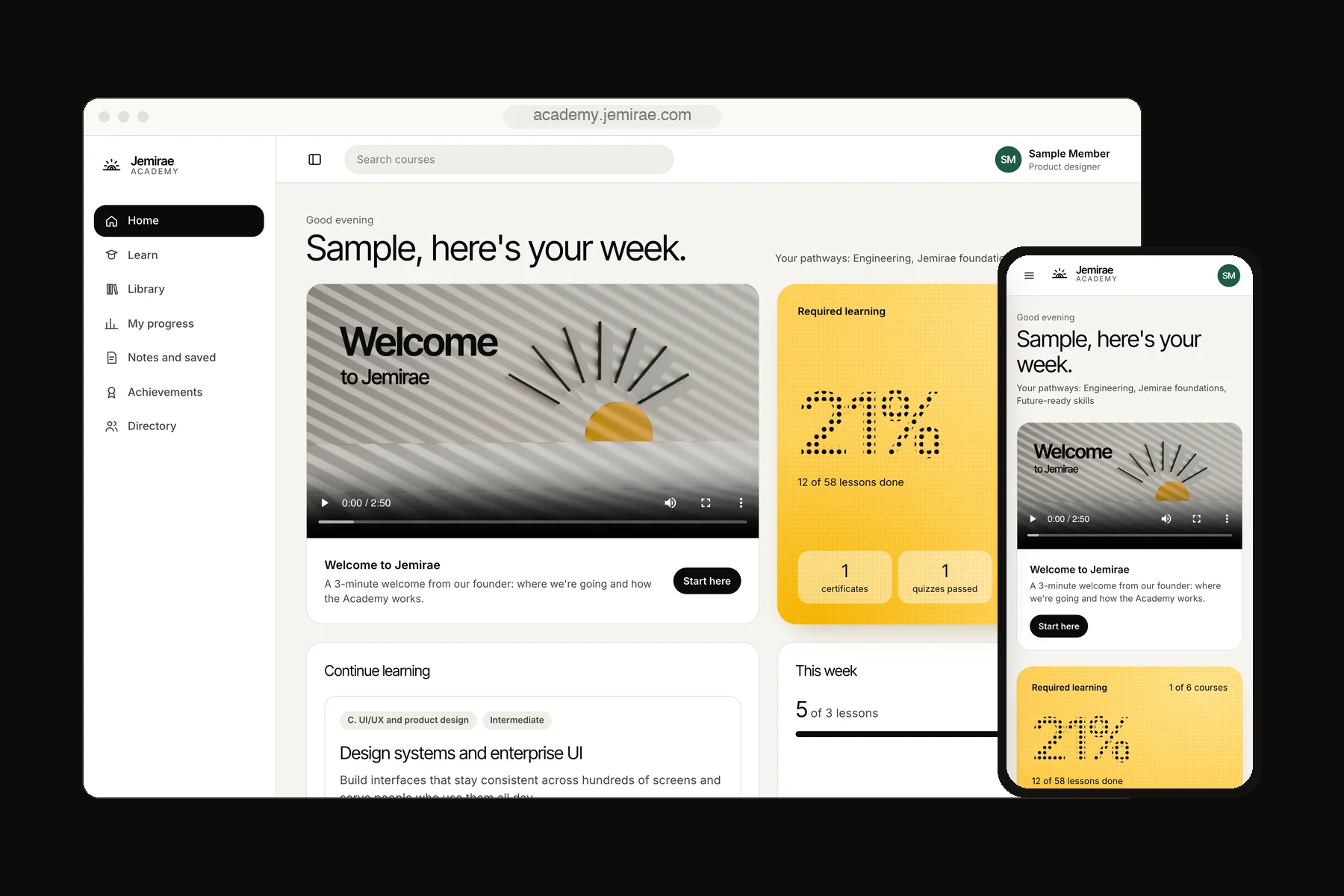
Everyone who joins Jemirae learns how we work, and shows it in practice, before they work with a client.
- Client
- Jemirae (our own team)
- Type
- Internal tool
- Built
- November 2026
- Our role
- Research, product design, engineering, content and film
The challenge
Our team works between Tokyo and Lagos, with consultants who join for a project and people who stay for years.
Read more
Onboarding lived in chat threads, shared documents and calls that repeated the same answers.
Nobody could see who had learned what. A new designer and a new engineer got the same welcome, even though they needed different things. And because clients expect the same standard from every person we send, the gap mattered.
We set four limits before designing anything. No paid tools, because the team is still small. Only people we invite can get in. Staff data has to be handled as carefully as client data. And it has to work well on a phone with a slow connection, because that is how many people in Nigeria use the web.
- 21 courses
- Across consulting, design, brand, engineering, delivery, sales and the Japan and Nigeria corridor
- 190 lessons
- Videos, readings, PDFs, quizzes and practical exercises
- $0 a month
- Runs on Cloudflare's free plan, with no paid services
What we built
A private web app at academy.jemirae.com.
Read more
Each person sees a dashboard built around their role: what they must finish, what to continue, a weekly goal they set themselves, and announcements from the team.
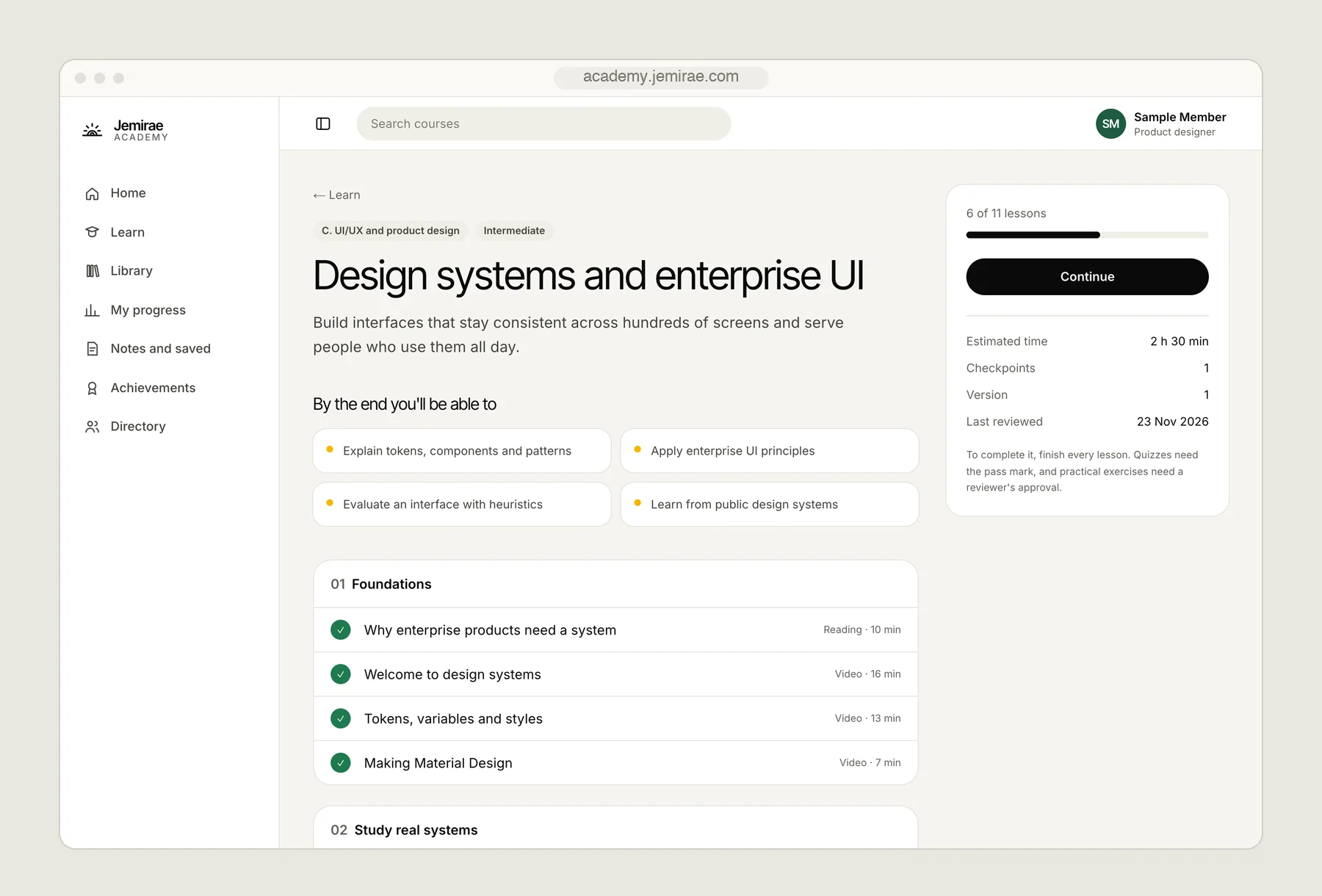
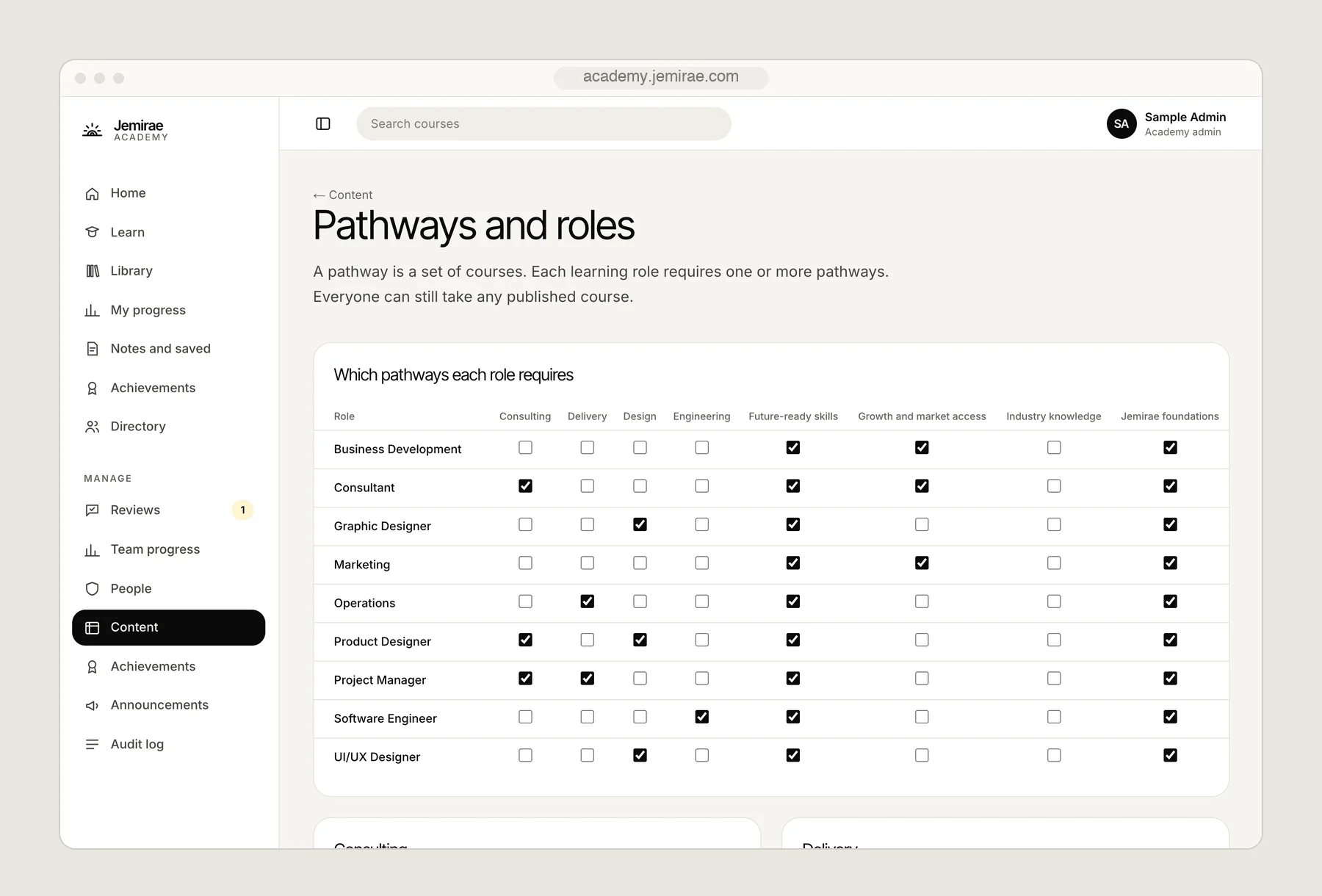
Learning is organised by pathway rather than by person. Each of the 12 roles, such as consultant, brand designer or sales, requires a set of pathways, and each pathway holds courses. When someone's role changes, their required learning changes with it, with no manual reassignment.
Everything else stays open. An engineer can study consulting, and a designer can learn sales, because we want people to grow outside their lane.
Learning that asks for proof
Finishing a course means doing the work, not clicking through it.
Read more
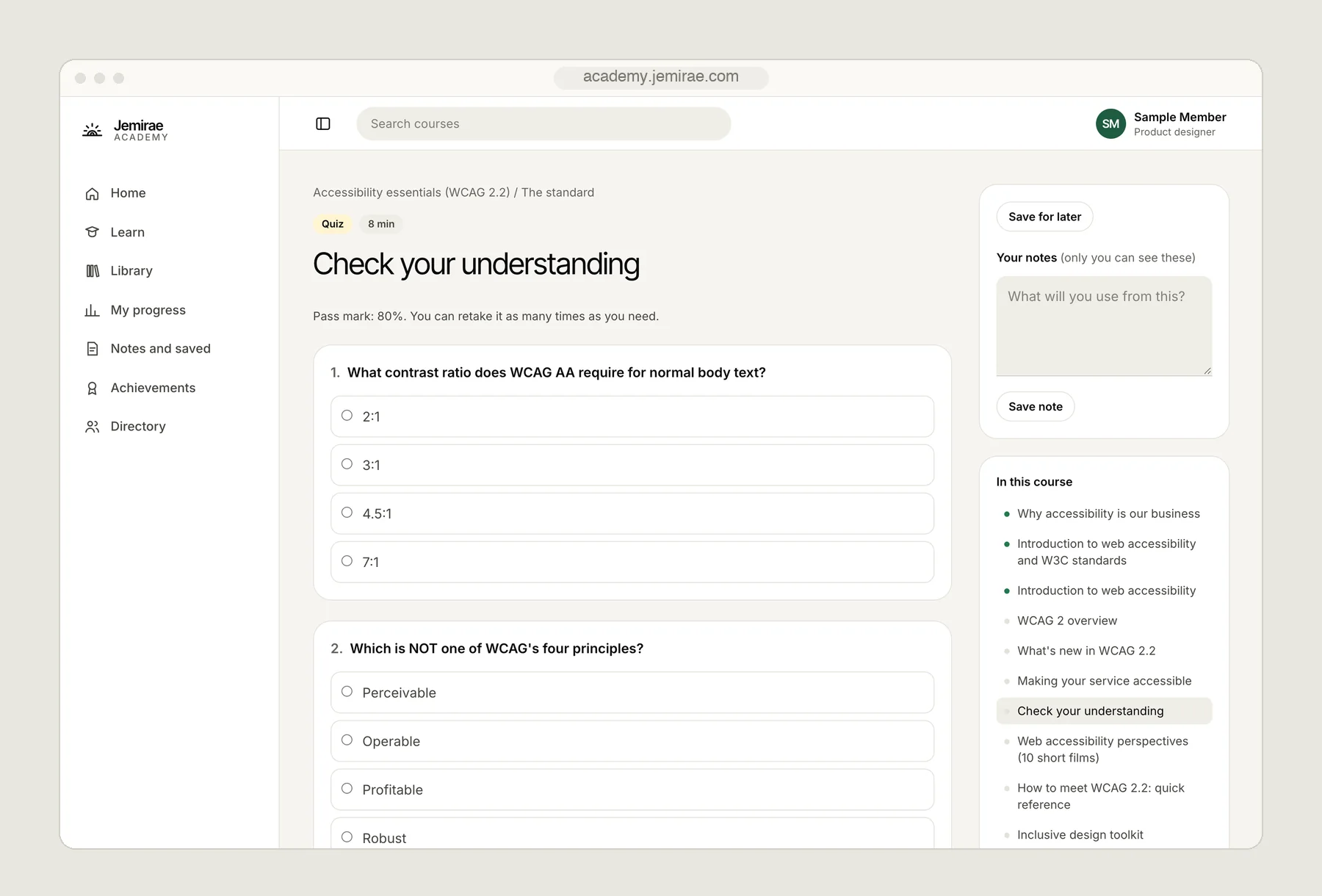
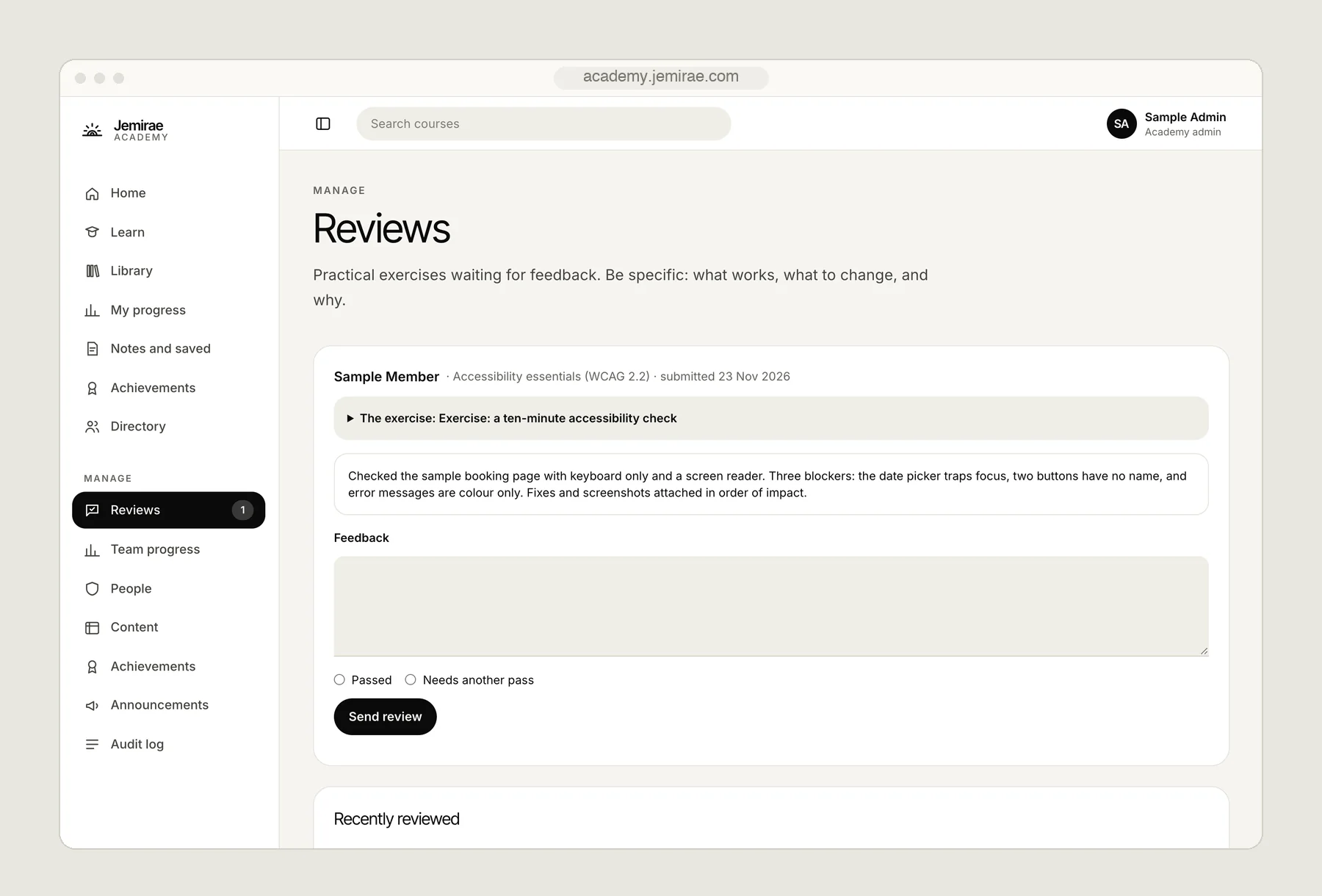
Every lesson has to be completed, quizzes need their pass mark, usually 75 or 80%, and practical exercises go to a team lead, who passes them or sends them back with written feedback.
The exercises mirror real client work: write a project update, plan a discovery call, run a ten-minute accessibility check, write a proposal summary. All the companies in them are fictional, so nothing confidential ever goes into the platform.
Only when all of that is done does the Academy issue a certificate, with a code that can be checked. It is an internal record, and the certificate says so.
Content from trusted free sources, plus our own
We researched and checked every course by hand.
Read more
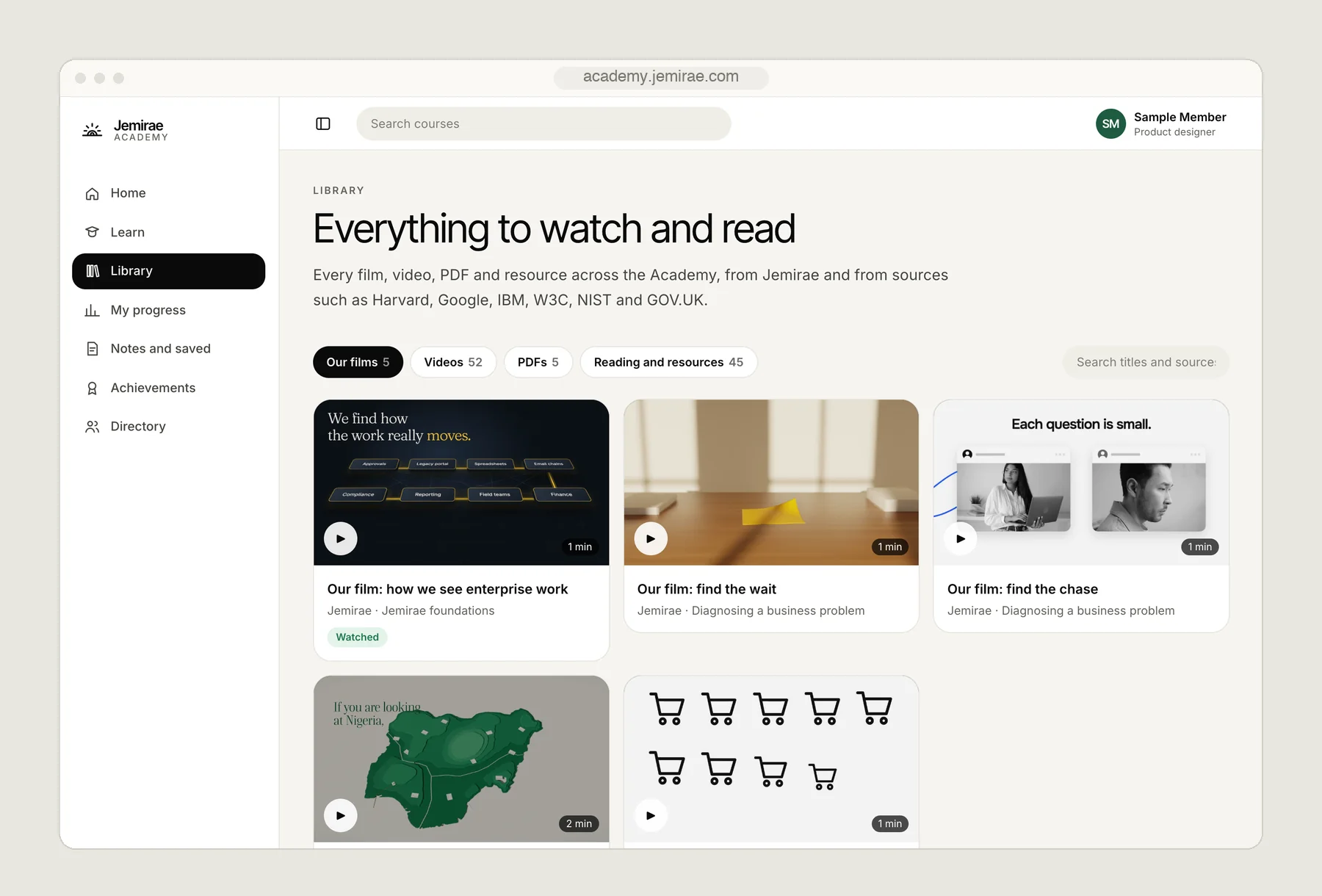
Videos are embedded only from official channels, and readings come from public standards and guides from bodies such as NIST, W3C, Scrum.org, JETRO and the Central Bank of Nigeria. Each lesson records its source and licence.
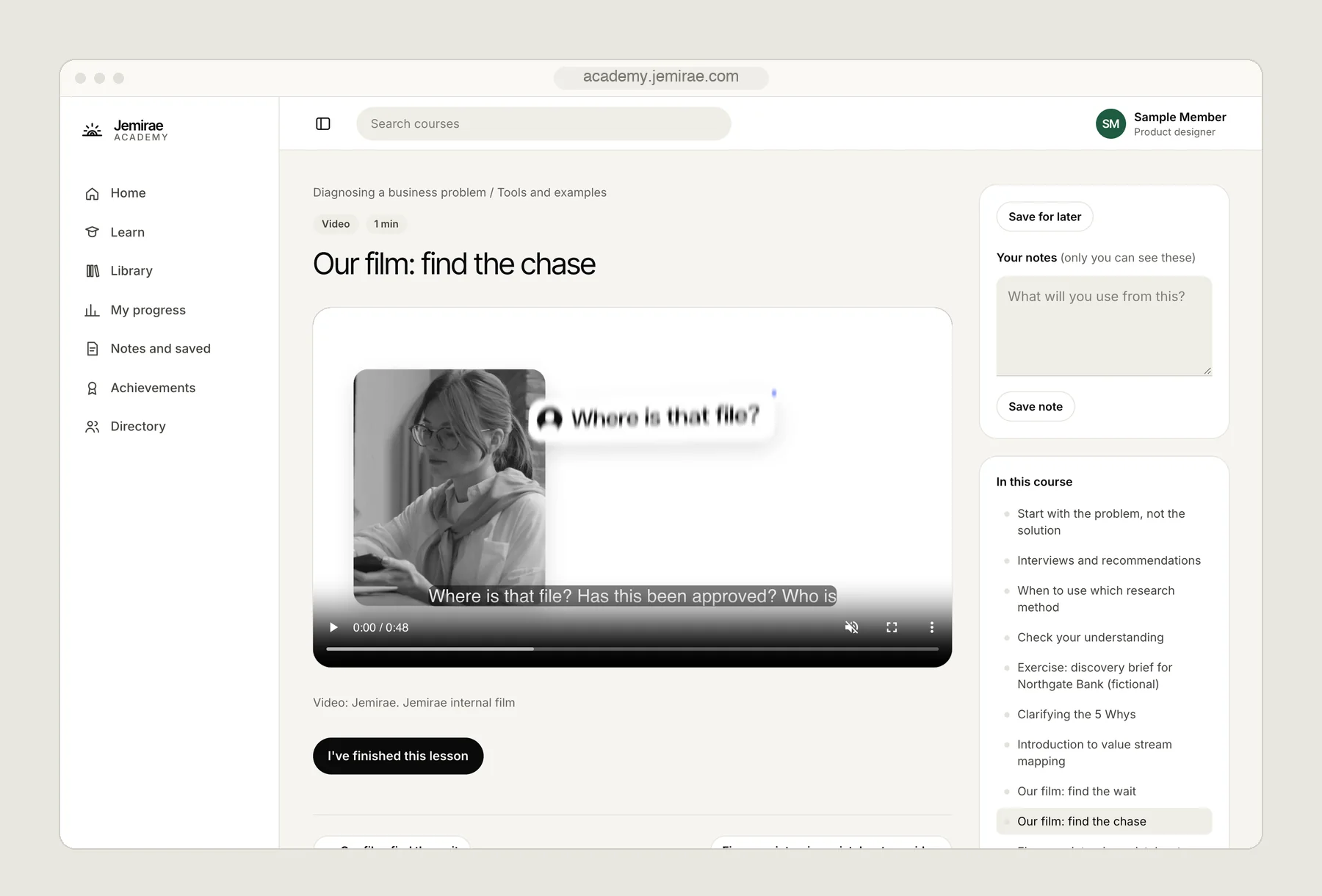
On top of that sit five films we made ourselves, each with captions, and a welcome film from our founder. Courses are marked as lasting skills, reviewed yearly, or fast-moving topics such as AI, reviewed every quarter. The admin view flags any course that is due and checks every external link.
The catalogue grows with the team. When we set up a client acquisition team and a sales team, we added courses on finding and reaching the right clients, including the email rules in Japan and Nigeria, and on sales calls, pricing and onboarding clients. Others cover brand identity and speaking English clearly, for calls and voiceovers.
Run by the team, without code
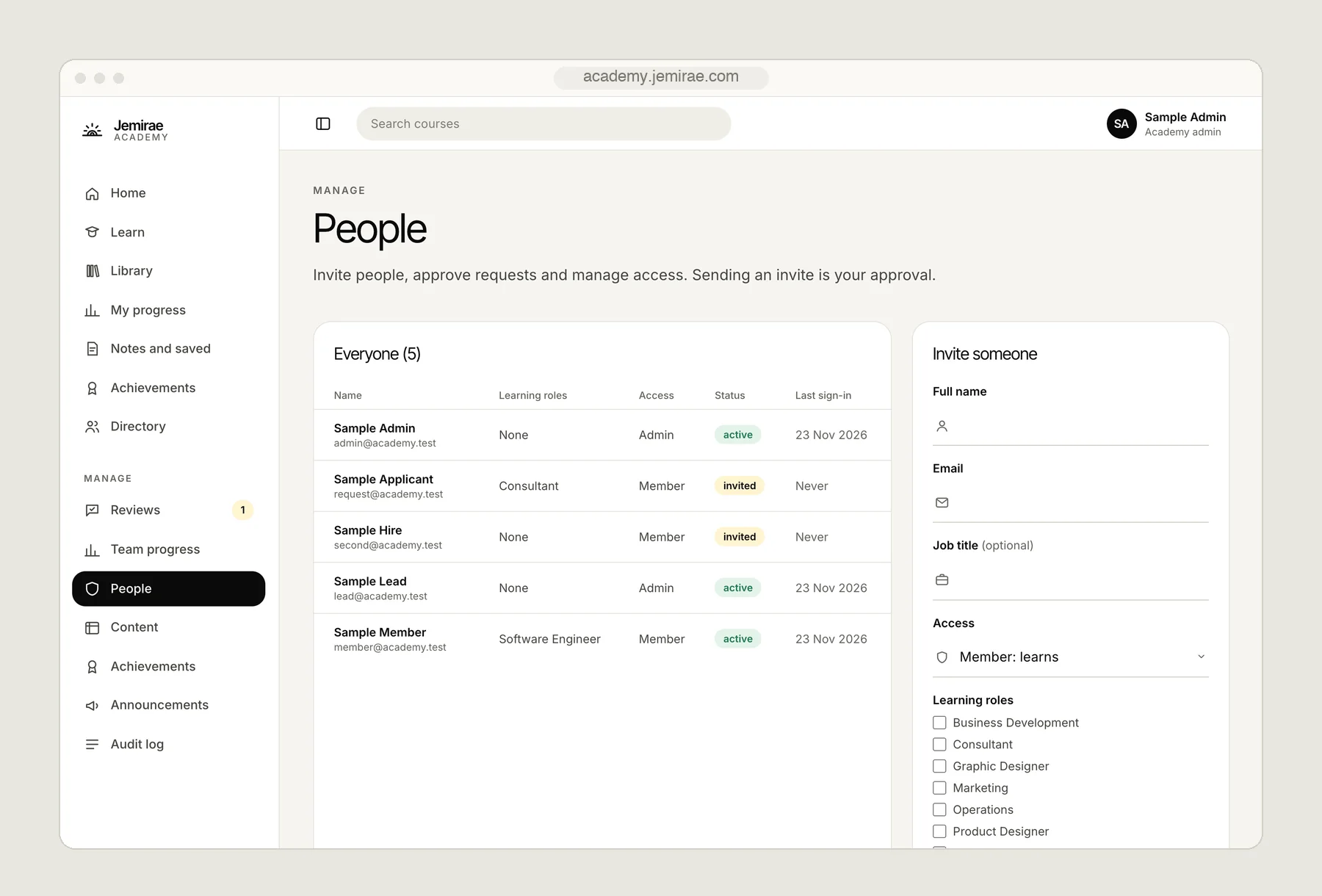
Admins invite people, approve or decline access requests, set roles and assign courses from one screen.
Read more
Courses, lessons, quizzes and pathways are all edited in the browser, with version numbers and review dates.
There is no email service to pay for. An invite or password reset is a one-time link that expires, and the admin sends it themselves by email or WhatsApp. Every change to people, access and content is written to an audit log.
A place for the team to talk
Learning works better when people can ask each other.
Read more
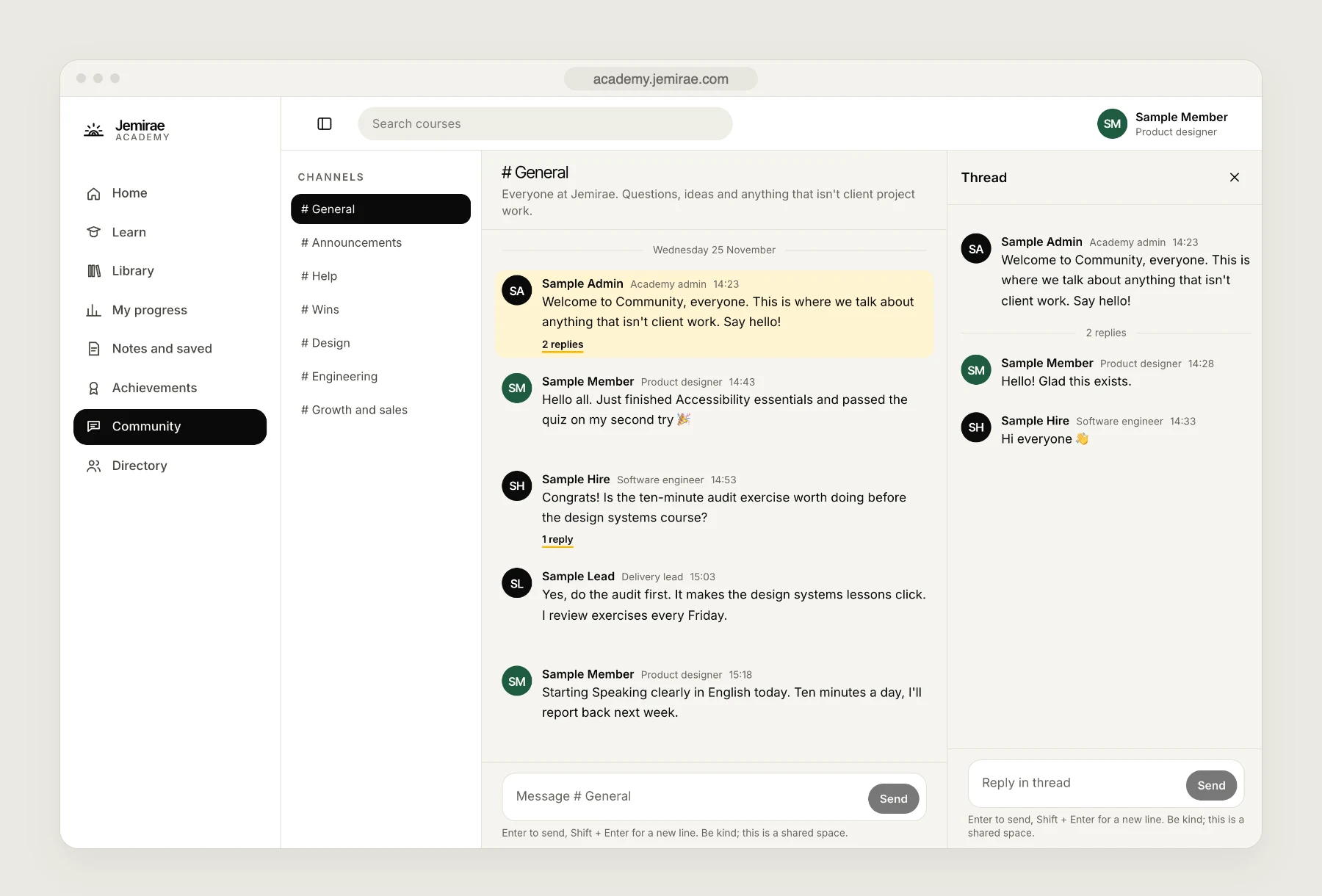
Community is the Academy's team chat: channels for everyone, help, wins and each discipline, with replies in threads so conversations stay easy to follow.
Announcement channels let leads and admins post news while everyone replies underneath. New messages show as a dot on the channel and a badge in the menu, on a phone or a laptop. People can delete their own messages, and when an admin removes someone else's, it is written to the audit log.
Secure on a free plan
- Passwords
Read more
Stored only as salted PBKDF2-SHA256 hashes with 100,000 iterations, using the platform's native cryptography. The free plan's processing limit ruled out slower hashing methods, so we chose the strongest option that fits.
- Sessions
Read more
A random token in a secure, HTTP-only cookie, with only its hash in the database. Suspending someone or resetting a password signs them out on every device.
- Access checks
Read more
Every page and every action checks permission on the server. A hidden button is never the only protection.
- Team chat
Read more
Messages are checked on the server, limited in length and posting rate, and shown as plain text, so nothing a person types can run as code on someone else's screen.
- Throttling
Read more
Sign-in attempts are limited per network address and per email, and access requests per network address.
- Privacy
Read more
Search engines are told not to index it. Profile photos are only served to signed-in colleagues, and invite and reset links are stored only as hashes.
- Audit log
Read more
Sign-ins and every change to people, access and content are recorded with the time, the person and the network address.
Made for phones
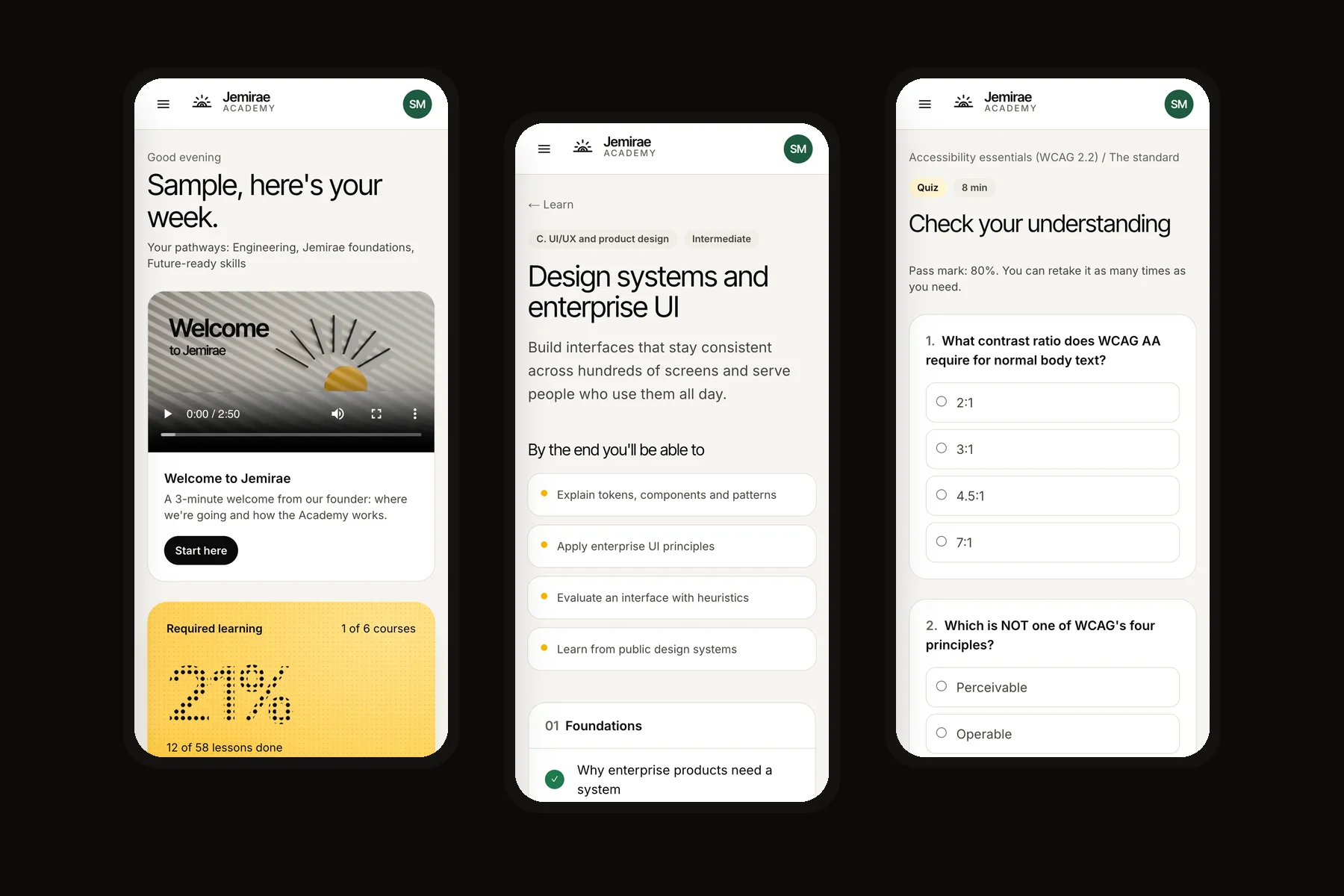
Most people open the Academy on a phone, often between other work.
Read more
Every screen was designed and tested at phone width first. People can also turn on a reminder at the hour they choose, sent as a browser notification rather than an email.
A short walk through it
What it shows about our work
The Academy is the same kind of tool we build for organisations: onboarding portals, training for teams spread across locations, libraries of procedures, and portals for partners and distributors.
Read more
We used it to test our own approach under real limits.
For a client, some choices would change. Larger teams would add single sign-on with their existing accounts, automatic emails and a paid plan with more room. The structure stays the same: roles, pathways, proof of learning and an admin who doesn't need a developer.
What comes next
For now the Academy is for learning and team conversation, because we believe you learn before you earn.
Read more
The data model is organised around roles rather than people, so project assignments, client work, team planning and time tracking can be added later as new sections without rebuilding what exists.
The Academy is private, so there is no public link. The screens on this page use sample accounts.